
Connect the stages.
Recover the value.
Explore example process routes for plastic, cable and metal recycling. Each line must be configured around real material and output requirements.
Discuss a Processing Line ↗A complete line is more than a list of machines.
A complete recycling line is a coordinated system — main machines, screening and separation equipment, conveying, washing, dewatering and dust control. The configuration changes with the feed material and target output.
 01 / PLASTIC RECYCLING
Plastic recycling
process line.
For selected film, rigid plastic, pipe, profile and production scrap, the line can be configured with shredding, crushing, washing, drying, screening and optional density sorting depending on the contamination level and final product.
How the complete line works
A practical process map — individual machines and auxiliary modules are selected to match the material and output target.
Shredder · Crusher / granulator · Feed hopper
Vibrating screen · Magnetic separator · Air classifier · Gravity separator*
Belt / screw conveyors · Friction washer · Dewatering machine · Dryer · Dust collection
Gravity / density sorting and pelletizing are optional. Final stages depend on polymer type, contamination and target product. Final configuration is confirmed after reviewing material samples, capacity, site conditions and required output quality.
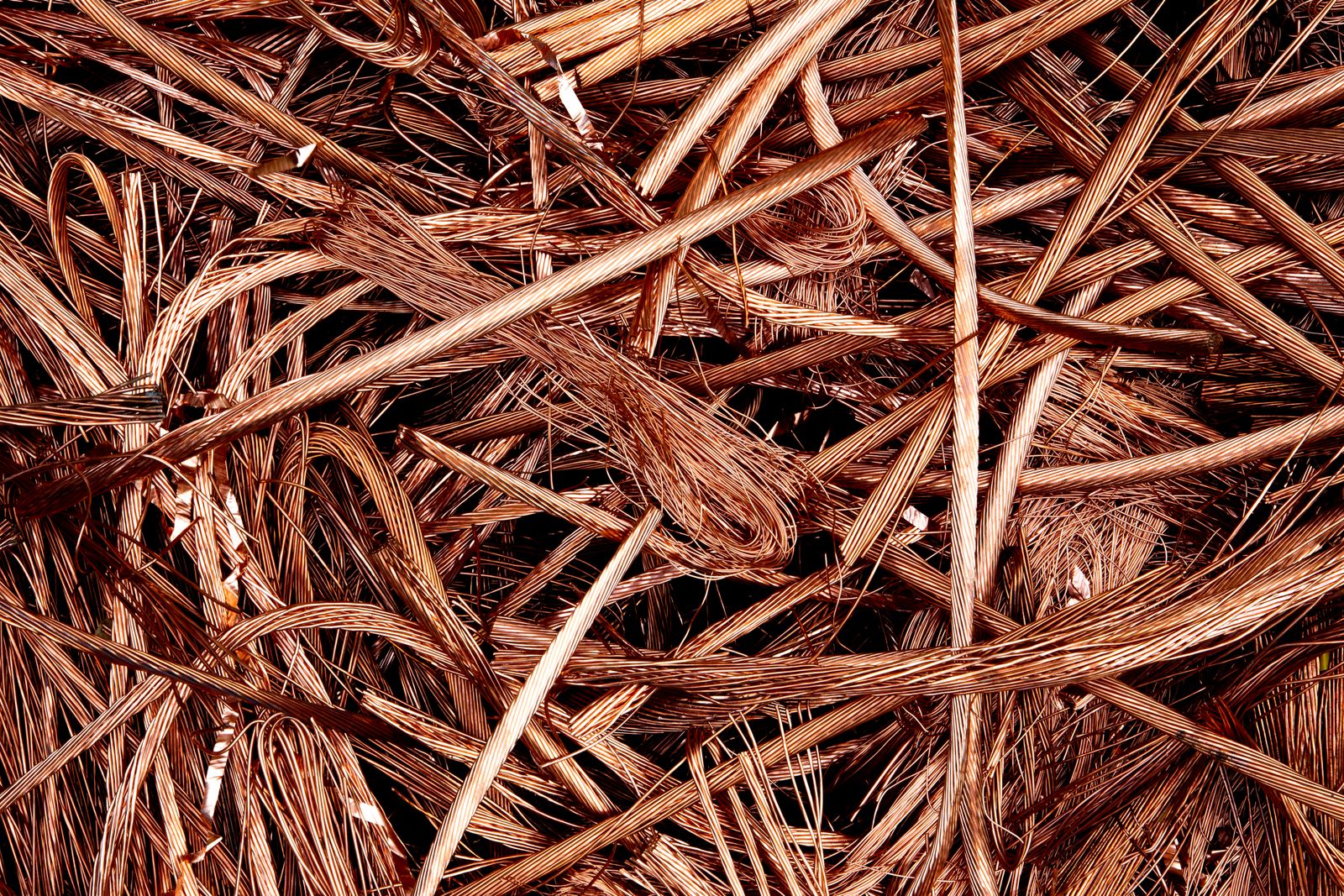
Cable recovery
process line.
For mixed cable and wire scrap, the process normally combines pre-sorting, shredding, granulation and multiple separation steps to improve copper recovery and reduce plastic carry-over.
02 / CABLE RECOVERYHow the complete line works
A practical process map — individual machines and auxiliary modules are selected to match the material and output target.
Cable pre-shredder · Cable granulator · Vibrating screen
Air classifier · Gravity / density separator · Magnetic separator · Eddy-current separator*
Metering conveyors · Collection hoppers · Dust collection · Electrical control
Gravity separation is commonly used to split metal granules from insulation. Eddy-current separation is selected for suitable mixed non-ferrous streams. Final configuration is confirmed after reviewing material samples, capacity, site conditions and required output quality.
 03 / METAL SCRAP
Metal scrap
processing line.
For mixed scrap, cans, light metal fractions or pre-cut material, the line can combine shredding, screening and staged separation to create more stable output streams for downstream recovery.
How the complete line works
A practical process map — individual machines and auxiliary modules are selected to match the material and output target.
Double-shaft shredder · Feed conveyor · Screening unit
Magnetic separator · Eddy-current separator* · Air classifier · Trommel screen
Belt conveyors · Dust collection · Discharge chutes · Storage bunkers
Eddy-current separation is used where the feed contains suitable non-ferrous metals. The exact configuration depends on scrap mix and particle size. Final configuration is confirmed after reviewing material samples, capacity, site conditions and required output quality.
What we need to understand before a line proposal.
Material profile
Material type, composition, form, size and contamination.
Target output
Required particle size, recovered fractions and quality expectations.
Operating context
Capacity, working hours, power supply, floor space and workflow.
Project scope
Single machine, phased upgrade or integrated processing line.